Problem Statement
How might we design a kid-friendly sleep companion that helps kids build healthy sleep routines, with intuitive controls that simplify complex features for busy parents?
Kids' Sleep Companion
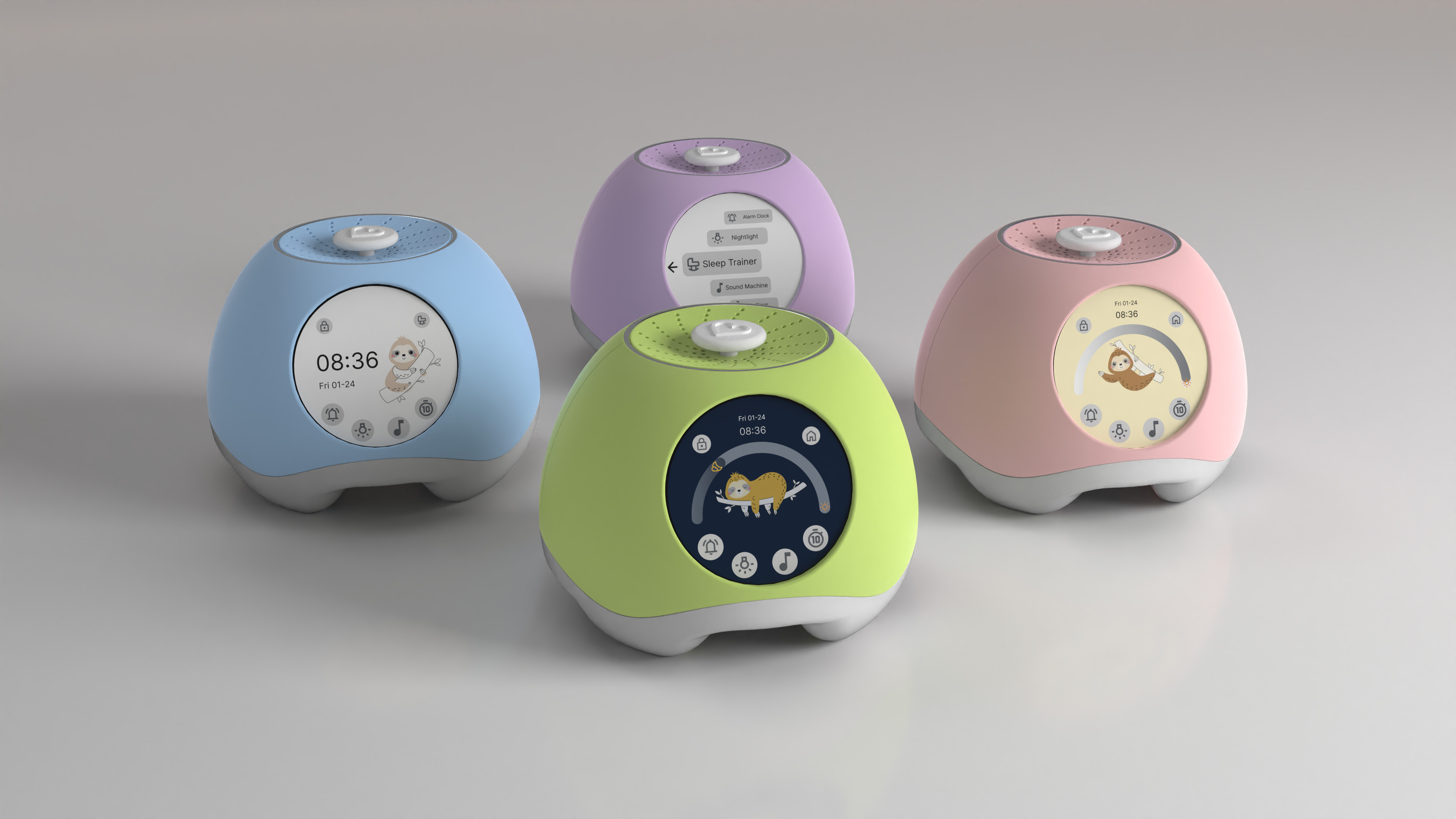
How can we design a nightstand device that meets the needs of both kids and parents? The goal was to create a fun, engaging design that promotes healthy sleep routines for kids while simplifying bedtime management for parents. Inspired by Munchkin's playful and sleek design language, Molli is a kid-friendly, intuitive sleep companion that combines a sleep trainer, sound machine, nightlight, alarm clock, and nap timer. With added features like a sleep progress indicator and gentle wake-up cues, Molli makes bedtime easier for parents and provides a comforting, enjoyable experience for kids.
Independent Design
2024
Challenge
Research
Ideation
Prototyping
Final Design
Reflection
How might we design a kid-friendly sleep companion that helps kids build healthy sleep routines, with intuitive controls that simplify complex features for busy parents?

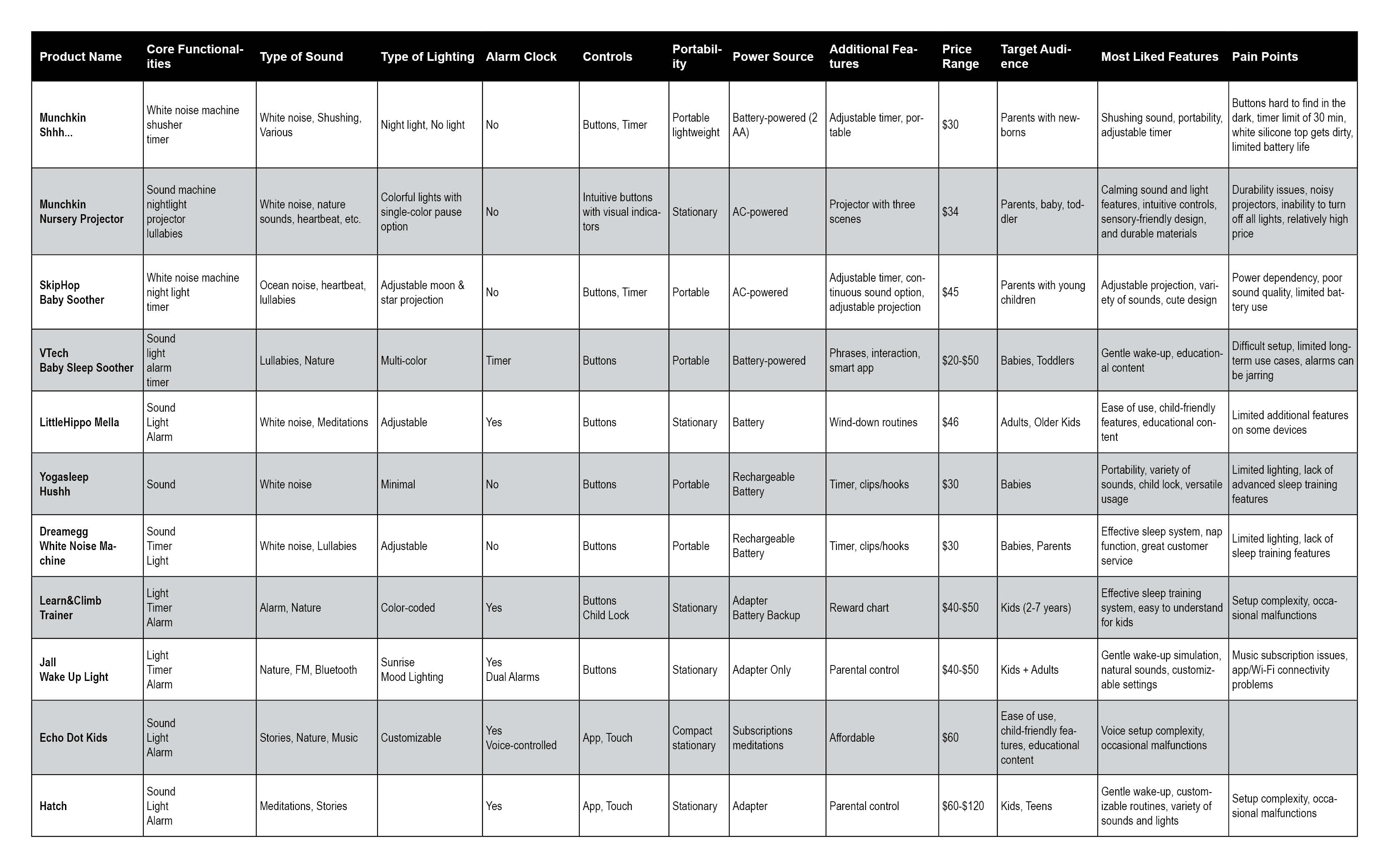
I conducted market research to identify opportunities for Molli. I analyzed 11 competitor products , including sound machines, nightlights, alarm clocks, and sleep training devices for children, and analyzed over 3,000 Amazon reviews with help of AI tools to identify pain points and standout features.
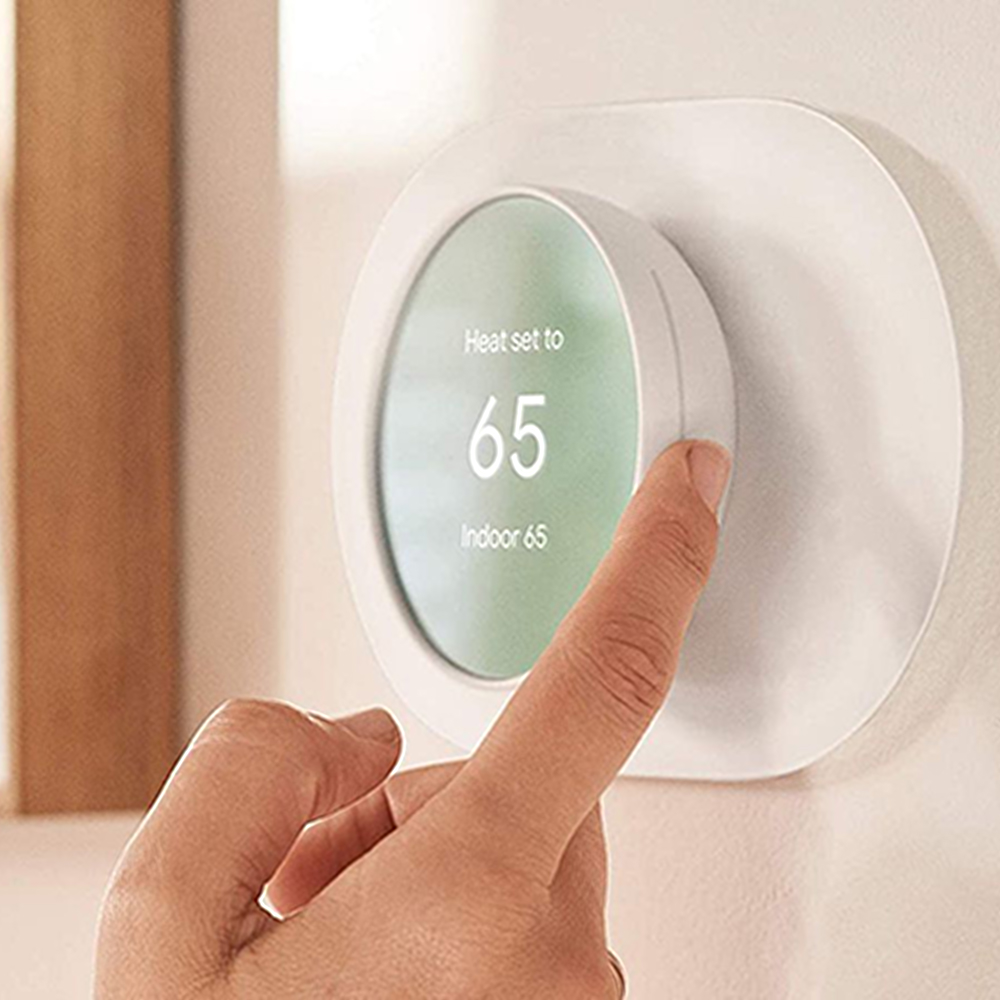
Many existing products overwhelm parents with complex physical buttons or app-based controls, causing frustration. Molli can simplify bedtime by seamlessly integrating sound, light, alarms, and an intuitive touchscreen interface, making it easier and more efficient for parents to use.

Parents often struggle with tools that don't support naptime and activity routines, while kids find it difficult to grasp bedtime, sleep progress, and wake-up time. A device that guides these transitions can foster healthy sleep habits and simplify bedtime for families.

Many existing options fail to meet both parents' and kids' expectations. By incorporating soft silicone textures, a playful color palette, and an intuitive touchscreen interface designed specifically for kids, the product will be both engaging for children and reassuring for parents.


Munchkin's design language blends playful, sleek aesthetics with practical solutions for children's products. Their designs feature soft, rounded forms, tactile materials, and bright, cheerful colors that resonate with both children and parents. This approach inspired Molli's development, merging fun aesthetics with thoughtful functionality.
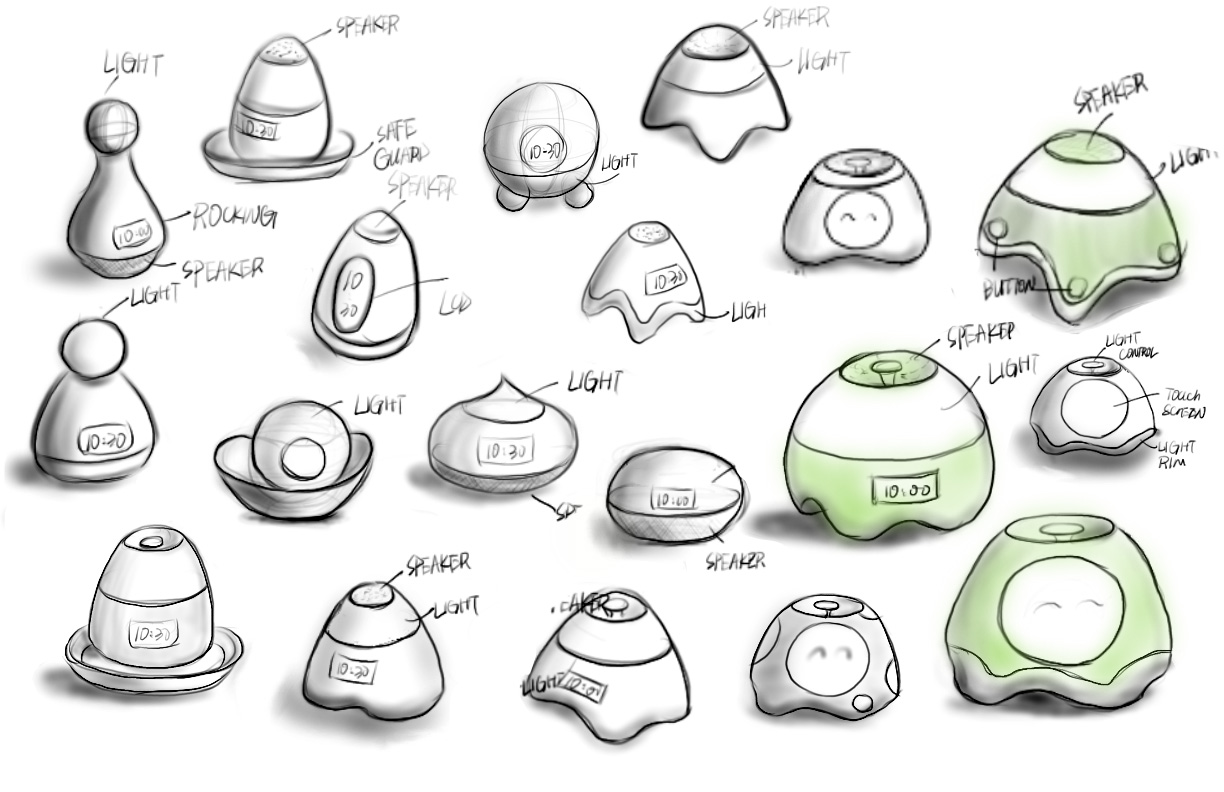
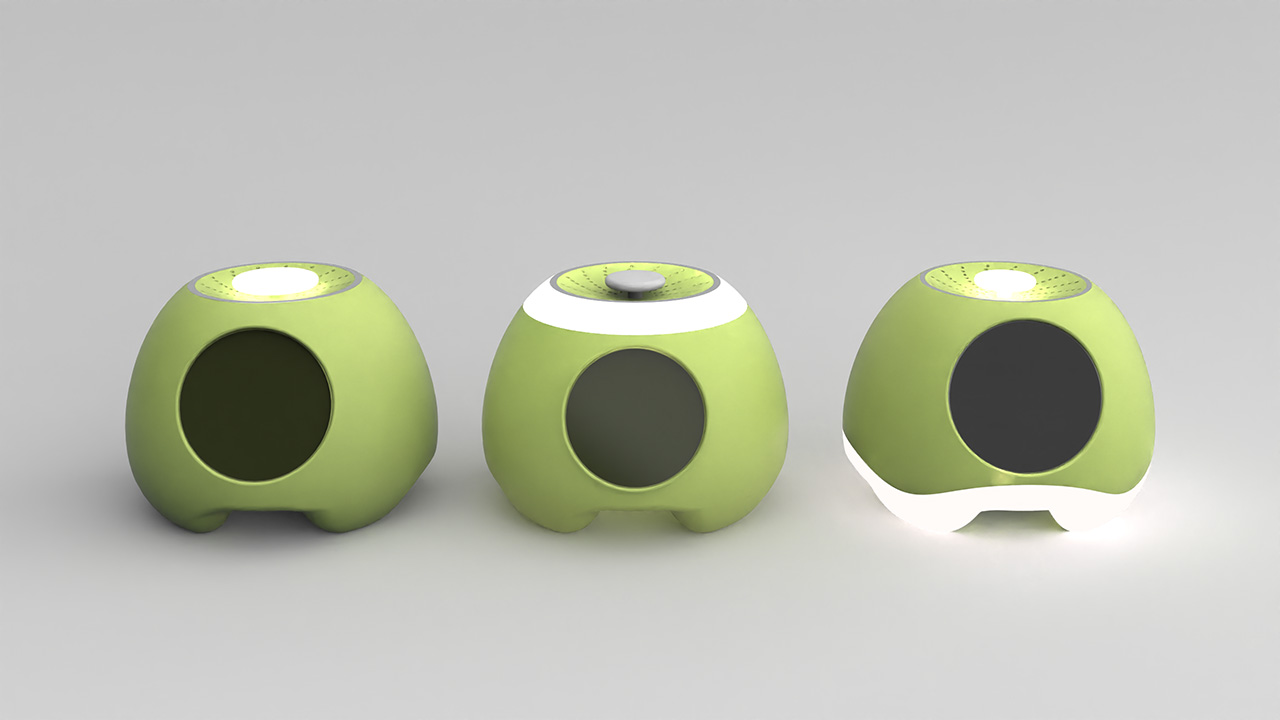
The ideation process focused on exploring forms that are adorable and friendly, capable of integrating all key features while staying true to Munchkin's playful and vibrant design language.

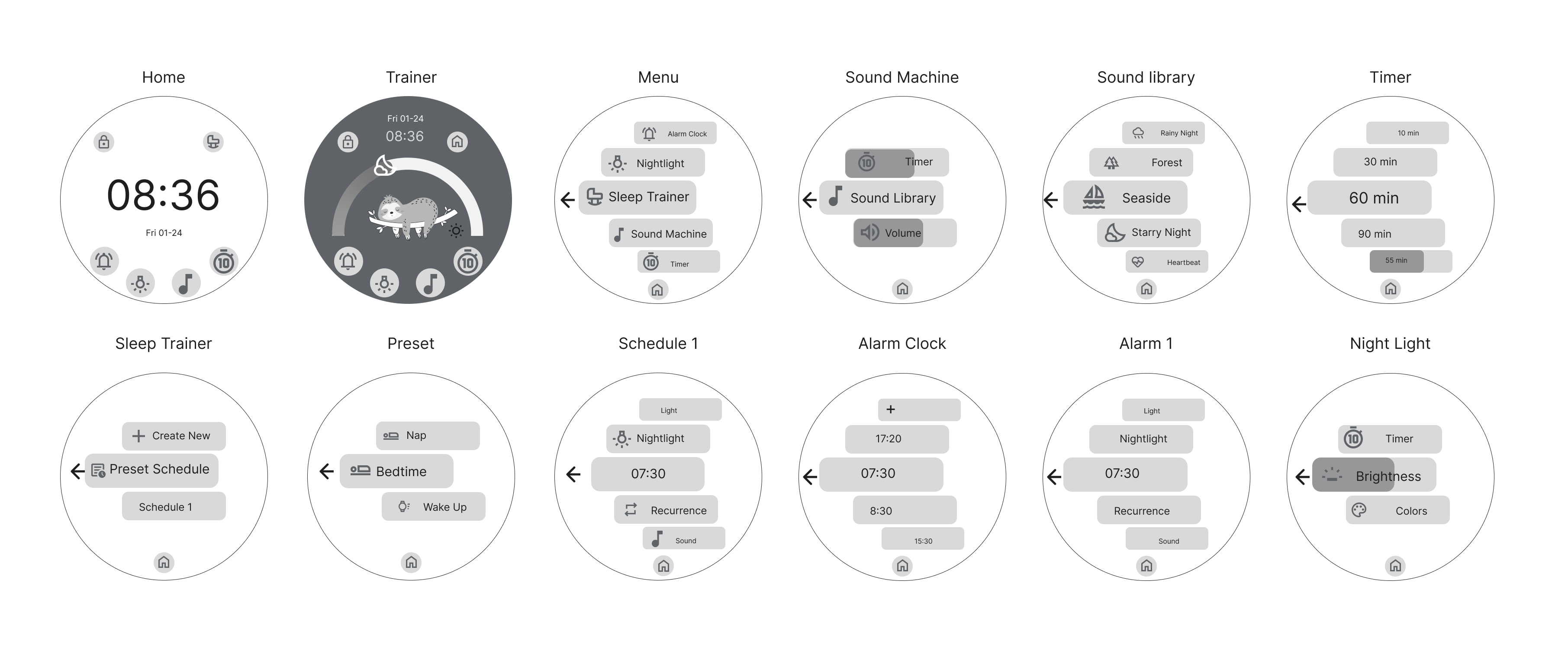
To ensure intuitive control of Molli's multifunctional features—sound machine, nightlight, alarm clock, sleep progress indicator, and sleep trainer—I created a user flow chart. This helped me understand the structure of user interactions, which laid the foundation for creating the UI design. By mapping out the sequence of actions, I was able to develop a user-friendly interface that aligns with the product's functions.
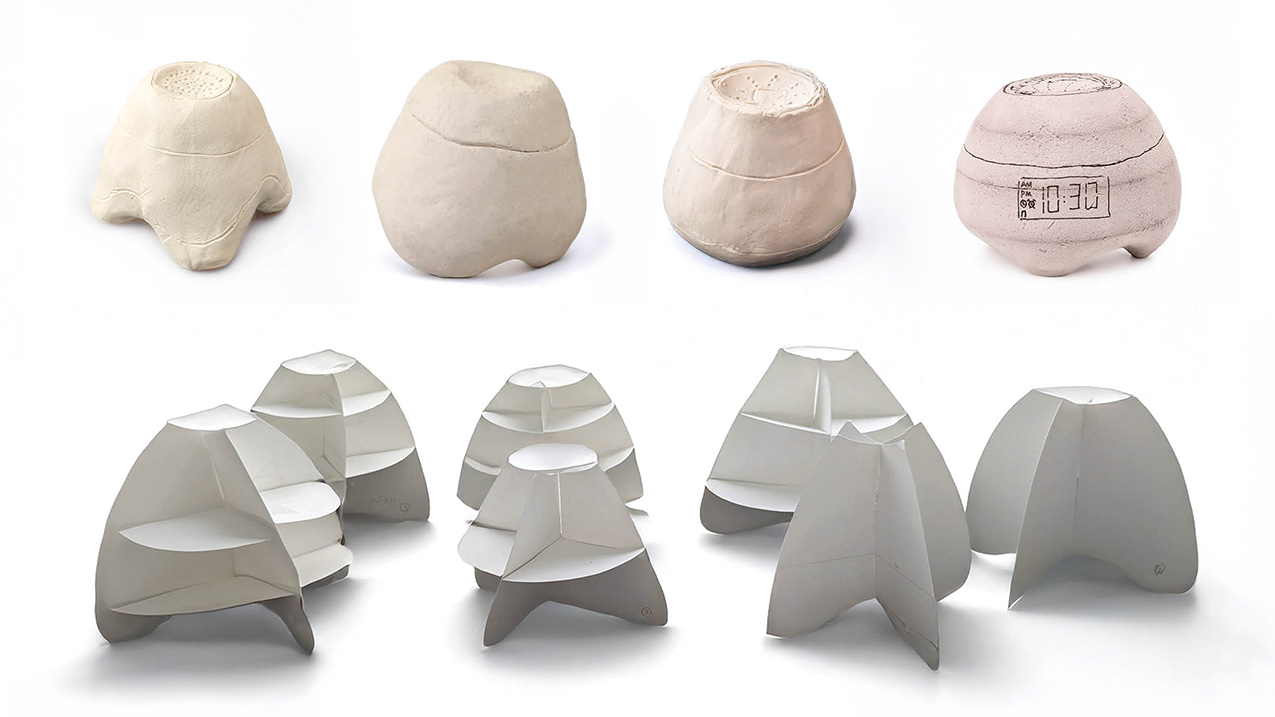
Clay models were used to explore and refine the right form, followed by paper models to determine optimal size and proportions. Finally, XPS foam models helped visualize the overall look and fine details, bringing the design closer to reality.
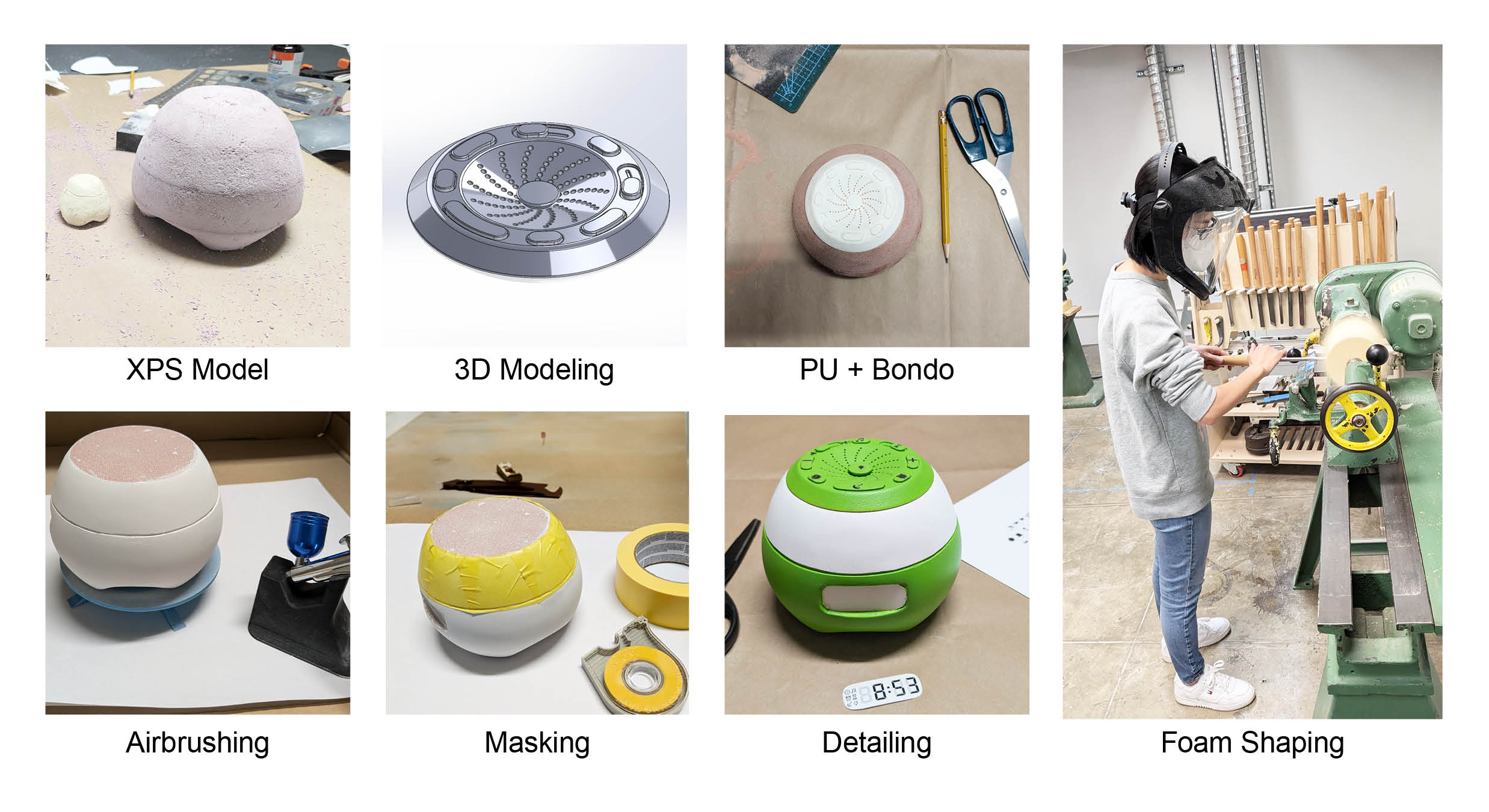
Created as part of a model-making class, this phase focused on honing physical model-making techniques. The model incorporated 3D printing and PU foam shaped with a lathe machine, finished with airbrushing for a polished appearance. Details such as labels, a screen, and a charging port were added to enhance realism and bring the design to life.

In this iteration, the design was refined by replacing the LCD display with a touchscreen, enhancing the user interface and overcoming the limitations of static buttons. The top button, serving as the nightlight control, was retained to preserve its tactile feel for nighttime use and its playful nature as a light. To further enhance the design's appeal and maintain its fun, kid-friendly aesthetic, a playful waving element was introduced.
The wireframe was designed to create a seamless, user-friendly experience for both parents and kids. Prioritizing intuitive interaction, it follows key UI principles for children—minimal text for clarity, large icons for easy navigation, and playful elements to keep the interface fun and engaging.

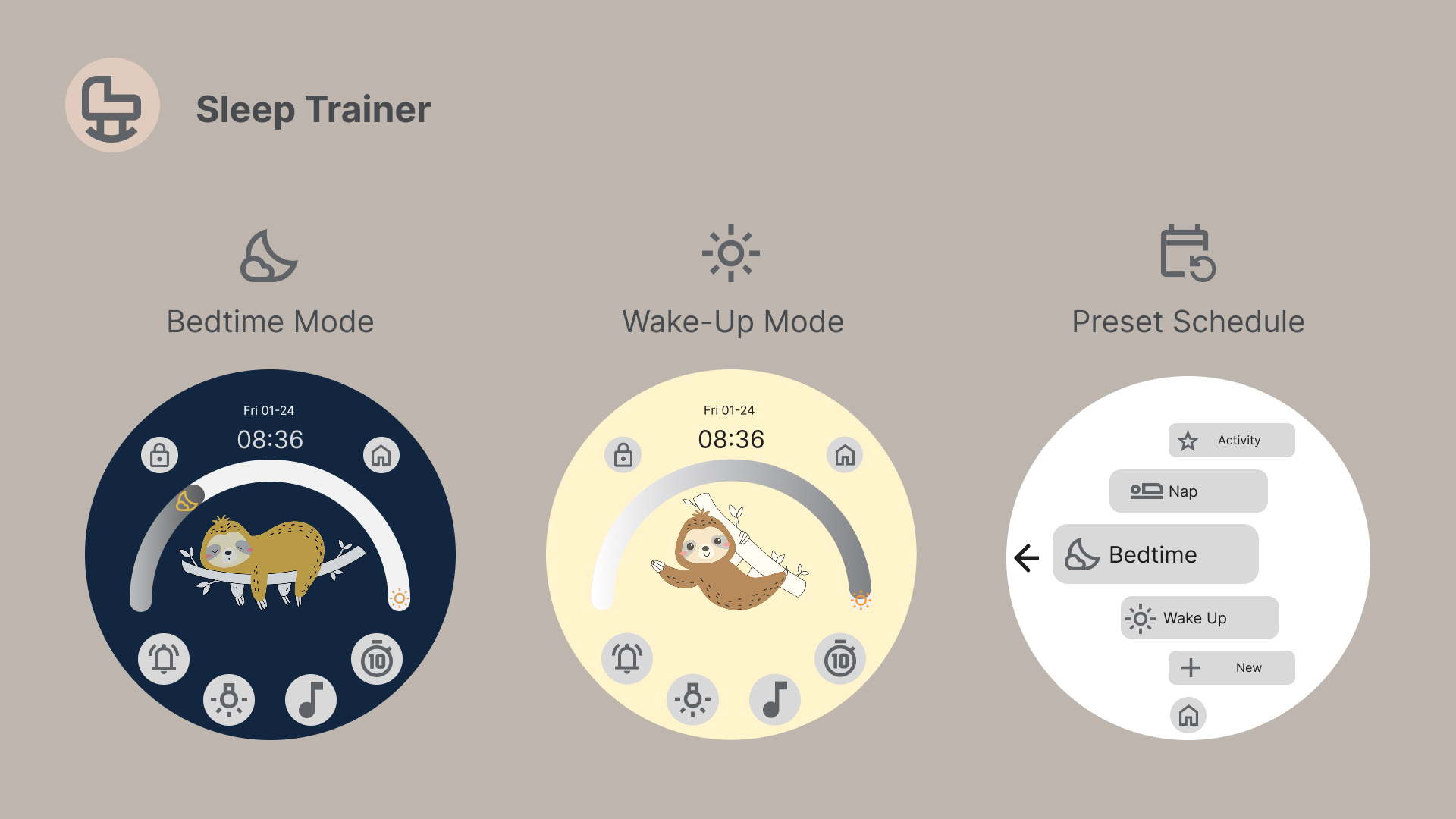


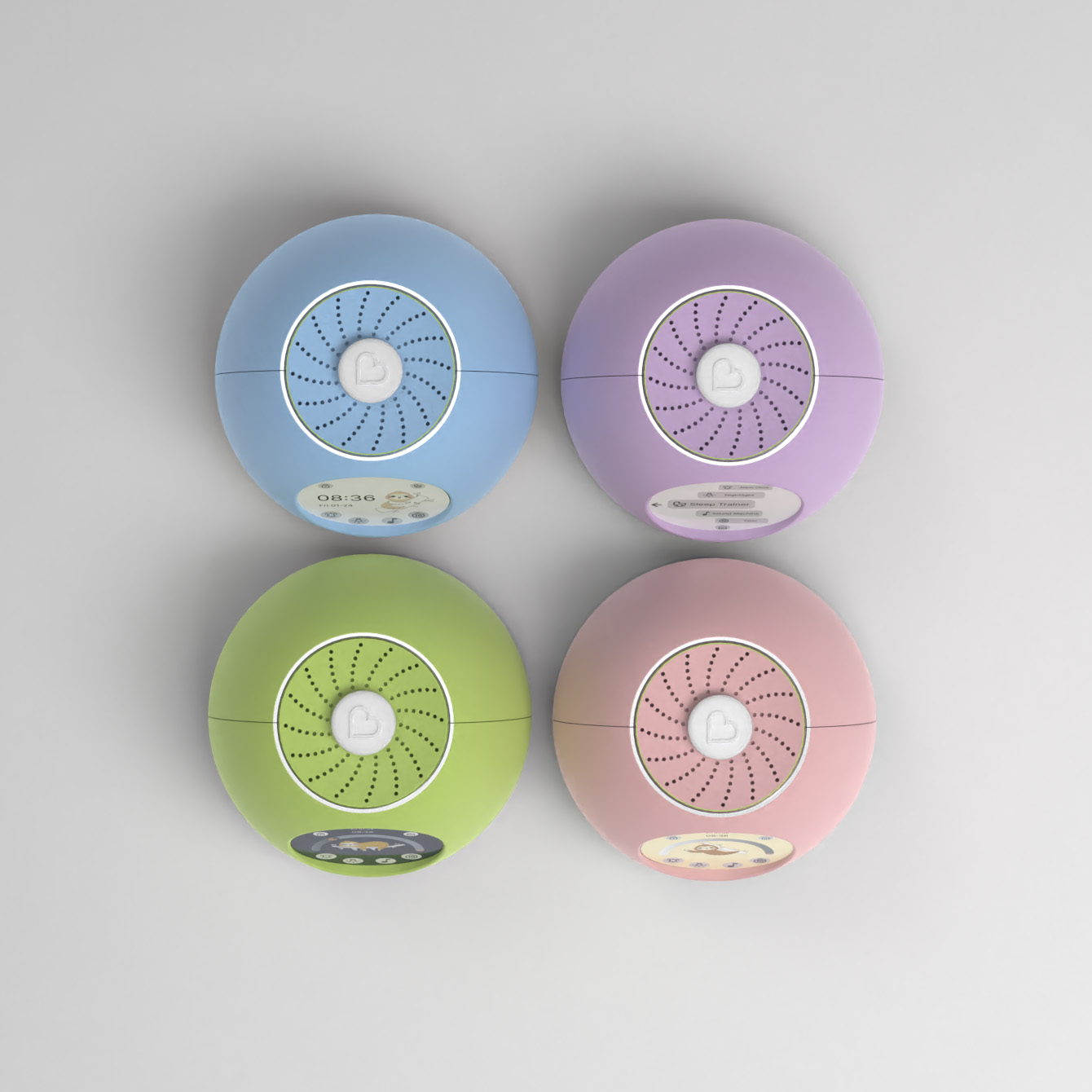
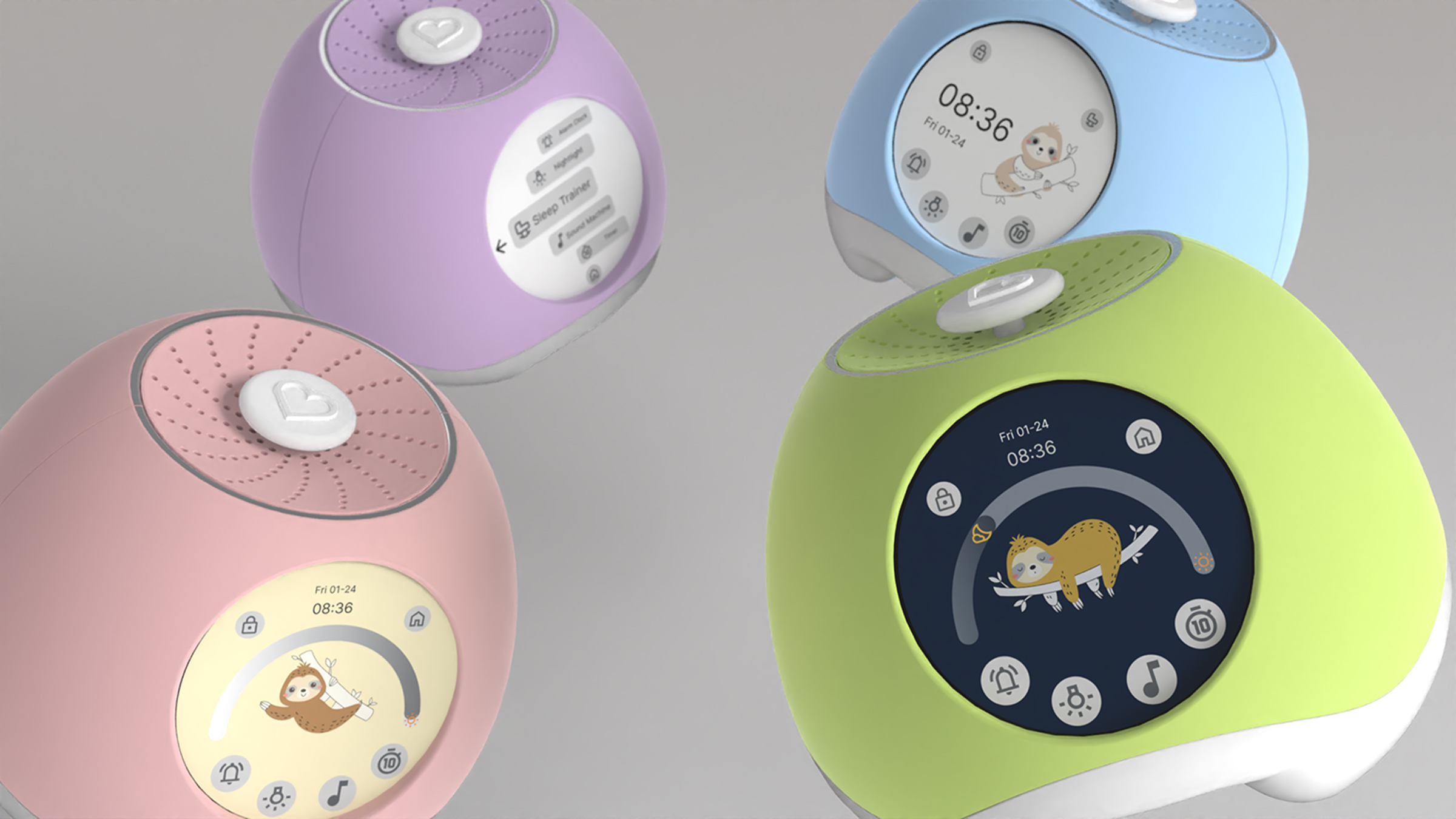
For the Molli project, I took a user-centered design approach, focusing on functionality, usability, and emotional connection to create a product that kids love to play with and parents can rely on.
Market and user research were essential in shaping both the product and UI design, ensuring it met real user needs.
The biggest challenge was integrating multiple functions into an intuitive interaction design. Throughout several iterations, including the switch from physical buttons to a touchscreen, I was able to refine the user flow and interface to enhance usability.
This project reinforced my commitment to designing products that make daily life easier and more enjoyable. Applying a user-centered approach to Molli strengthened my design workflow and knowledge base, further shaping my overall approach to creating intuitive, everyday solutions.